Through the Coal Dust: A Brick Factory Encounter
Updated: Apr 15
A few minutes in a Bangladesh brick kiln nearly broke me. My Bangladesh documentary photography shows workers breathing coal dust for a couple of bucks daily.

The Search for Smoking Stacks
Eyes peeled to the horizon for smoking stacks of brick factories, a seemingly favorite subject of ours, we finally found a massive one full of activity.
Rounding the corner of the kiln, I came across two young men shoveling and grinding big chunks of coal into the coal dust that would be used to stoke the kiln fires. With only filthy head wraps to protect them, so much coal dust was pouring out from the 3-walled corrugated iron shack that you could hardly see them through the haze.
I have never seen worse working conditions in my life.
The coal dust was so oppressive that I was only able to tolerate the confines of the small hut for a few short minutes before having to run out for fresh air. The thought did not escape me that these men will probably spend the rest of their working lives in there, serious lung disease awaiting.
Bangladesh's Brick Economy: Built on Human Cost
Bangladesh produces over 15 billion bricks annually from more than 8,000 brick kilns across the country. Workers at these factories earn roughly 300-500 taka per day - about $3 to $6 USD. Most have no protective equipment beyond whatever cloth they can wrap around their faces.
Studies show that brick kiln workers have significantly higher rates of respiratory disease, skin problems, and eye infections compared to the general population. The coal dust and smoke exposure leads to chronic bronchitis and other lung conditions. Most workers have no access to healthcare or safety training.
The brick industry employs over one million people seasonally, operating primarily during the dry months from November to April. Many workers migrate from rural areas, living in temporary shelters near the kilns with their families. Children often work alongside adults, missing school during these crucial months.
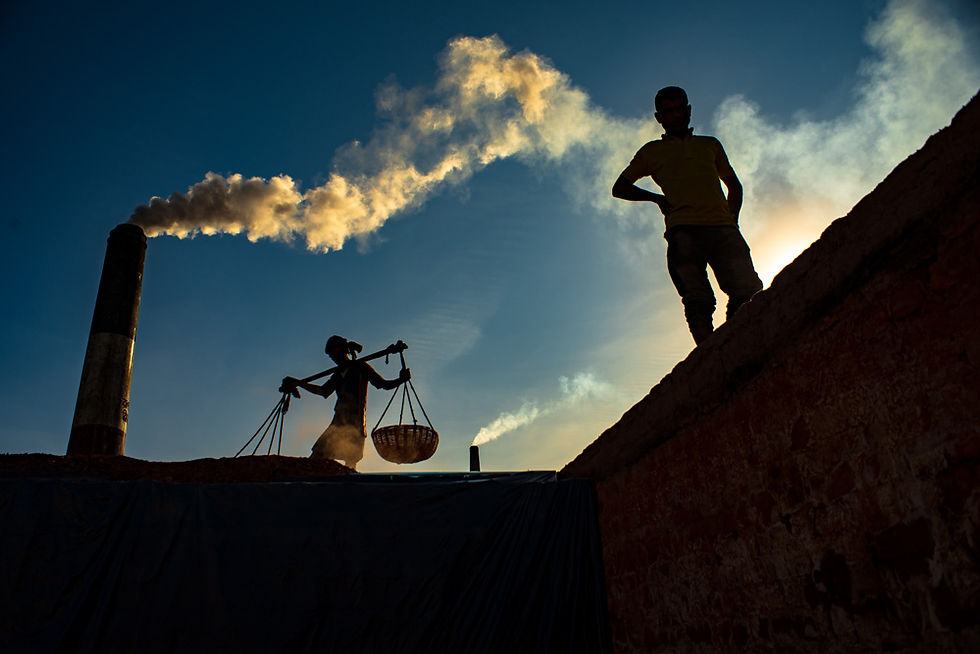
Despite contributing significantly to Bangladesh's construction boom and economic growth, the industry remains largely unregulated. Environmental groups estimate that brick kilns contribute to 58% of fine particulate matter in Dhaka's air pollution. The workers who make this growth possible remain invisible in policy discussions about industrial development.
The Weight of Witness
I've learned that the most powerful photographs aren't always the ones that make you feel good. Sometimes they're the ones that make you feel period. That refuse to let you forget what you've seen.
This worker's story is now part of mine, woven into the larger narrative of ten days spent documenting real life in Bangladesh. This kind of Bangladesh documentary photography requires no post-production, no digital enhancement, just honest light falling on honest moments. The coal dust has settled, but the memory hasn't. Some images demand to be seen, to be remembered, to be shared. This is one of them.
When someone chooses to live with this photograph, they're choosing to remember. To carry forward a story that happened in a corrugated shack half a world away, where men slowly sacrifice their lungs to keep fires burning. Each print becomes a quiet reminder that behind every brick in Bangladesh's growing cities, someone breathed coal dust.
Available as a limited edition print.


Comments